
Published September 23, 2026 in Vendor Playbook
How digital kiranas grow revenue after going online

By Prashant Dodia
6 min read
TL;DR
- Move beyond manual WhatsApp chats by adopting structured product catalogues.
- Capture nearby catchment areas through active neighbourhood discovery on VoLoMart.
- Retain the full order value with transparent subscription tools instead of percentage commissions.
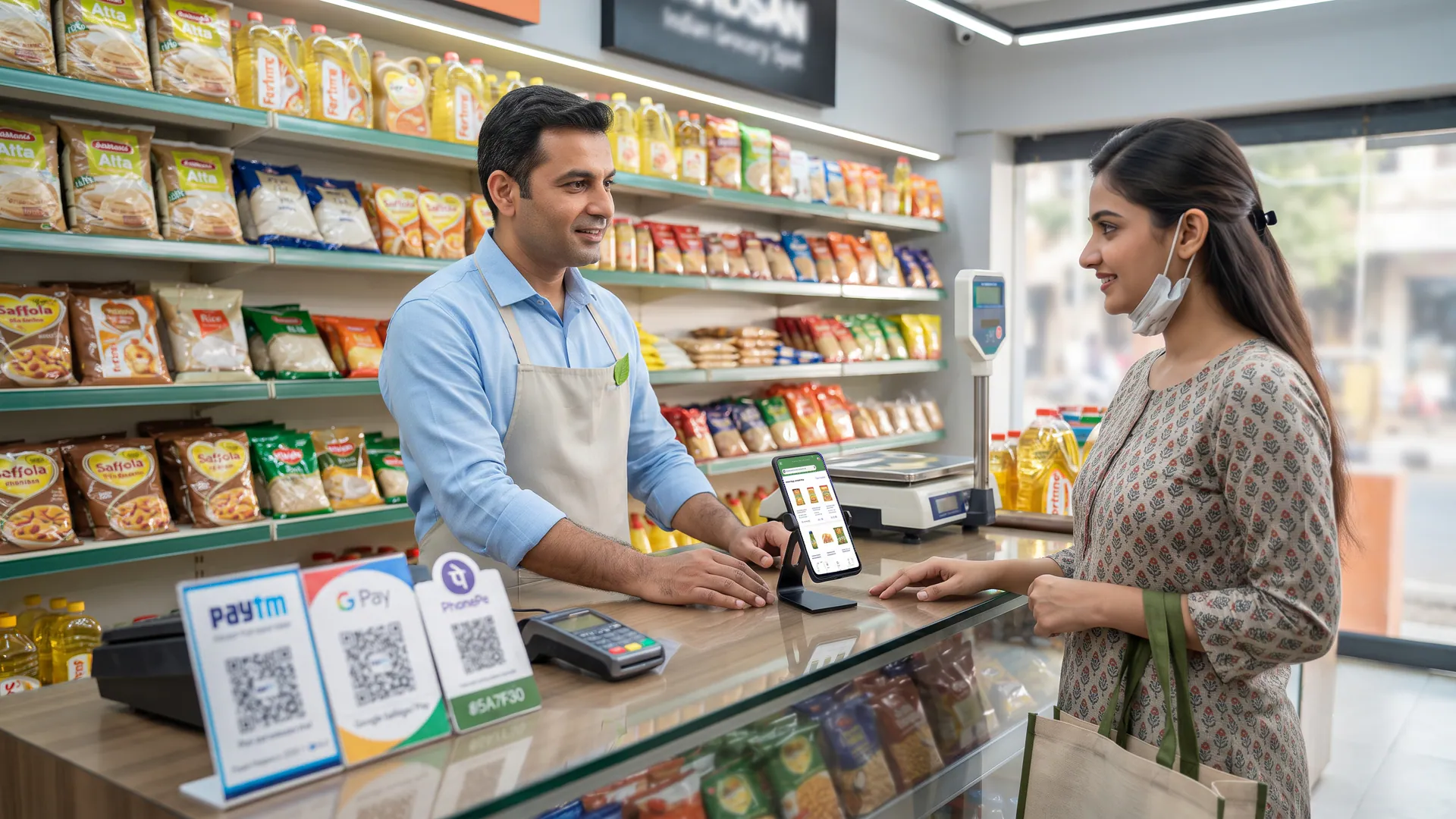
Digital kirana revenue growth happens when neighbourhood shops replace messy chat threads with structured digital catalogues, transparent shop hours, and nearby discovery. By letting local customers browse real-time availability and place direct orders, shops capture steady repeat business without losing time on repetitive enquiries.
For generations, neighbourhood kirana stores have formed the backbone of daily retail across Indian towns and cities. Yet, many shopkeepers find that informal communication channels like scattered phone calls and lengthy chat logs consume hours of valuable time without guaranteeing steady repeat sales. Understanding how digital kirana revenue growth unfolds helps small business owners modernise daily operations without losing their personal neighbourhood touch.
Why do traditional offline kiranas lose daily revenue?
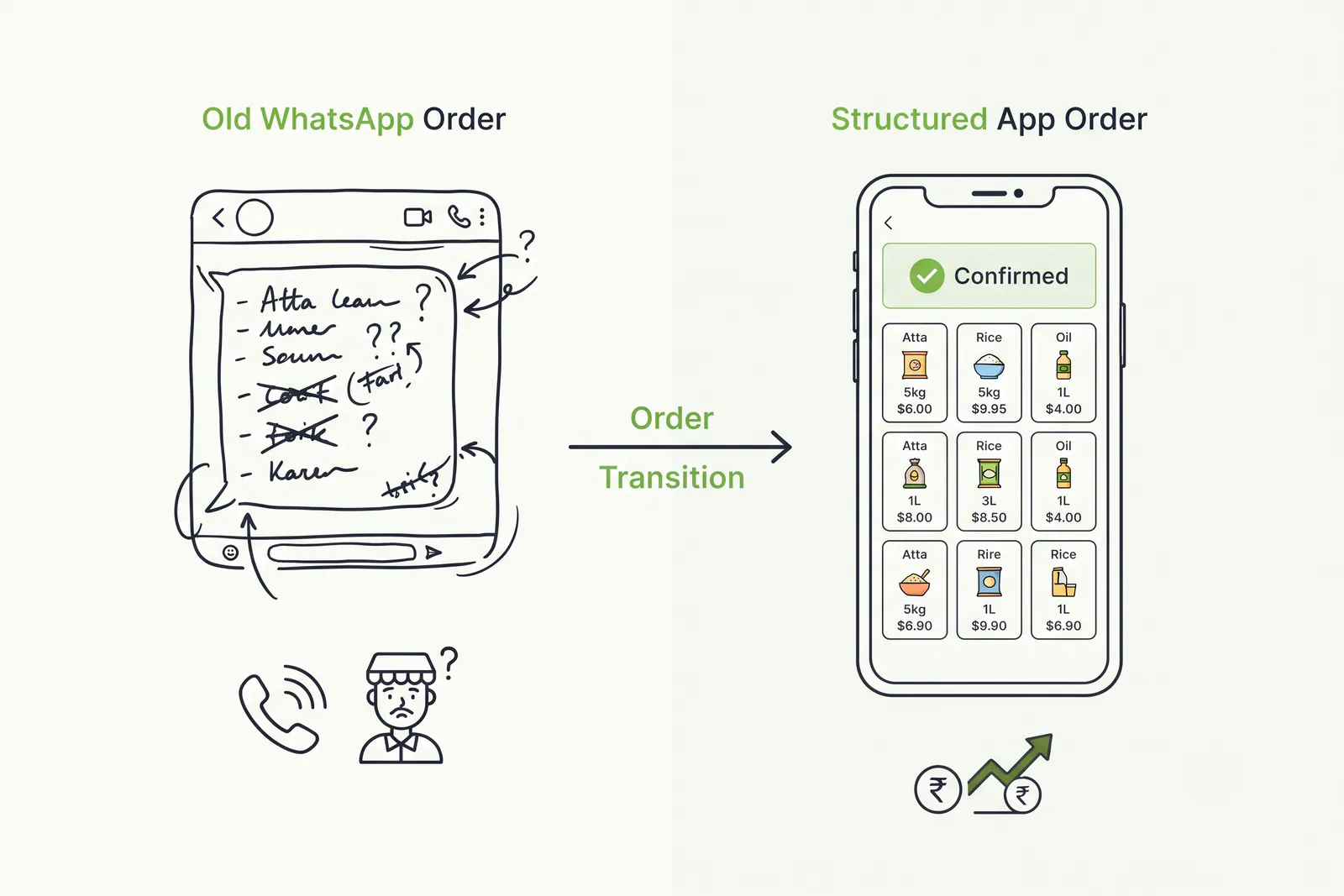
Traditional grocery shops often leak revenue quietly through friction in daily customer interactions. When a shopper sends an unformatted list of items via a messaging app, the shopkeeper spends precious minutes deciphering abbreviations, checking physical stock shelves, and typing manual price calculations. If an item is out of stock, another round of messages begins, often resulting in abandoned purchases or frustrated shoppers walking to a competitor.
- Unclear photo catalogues that fail to show current brand variations, pack sizes, or updated prices.
- Missed phone calls during peak morning or evening rush hours when the counter is crowded.
- Lack of visible delivery status or shop timings, leaving customers unsure when their daily essentials will arrive.
What digital levers actually move money for a grocery spot?
Driving sustainable business growth requires adopting specific digital workflows that respect how modern neighbourhood consumers shop. According to guidelines outlined by the Ministry of MSME, digital adoption empowers micro-enterprises to reach wider local catchments and streamline inventory management. Instead of building complex e-commerce websites from scratch, neighbourhood shops achieve better results through targeted local discovery and clear transactional clarity.
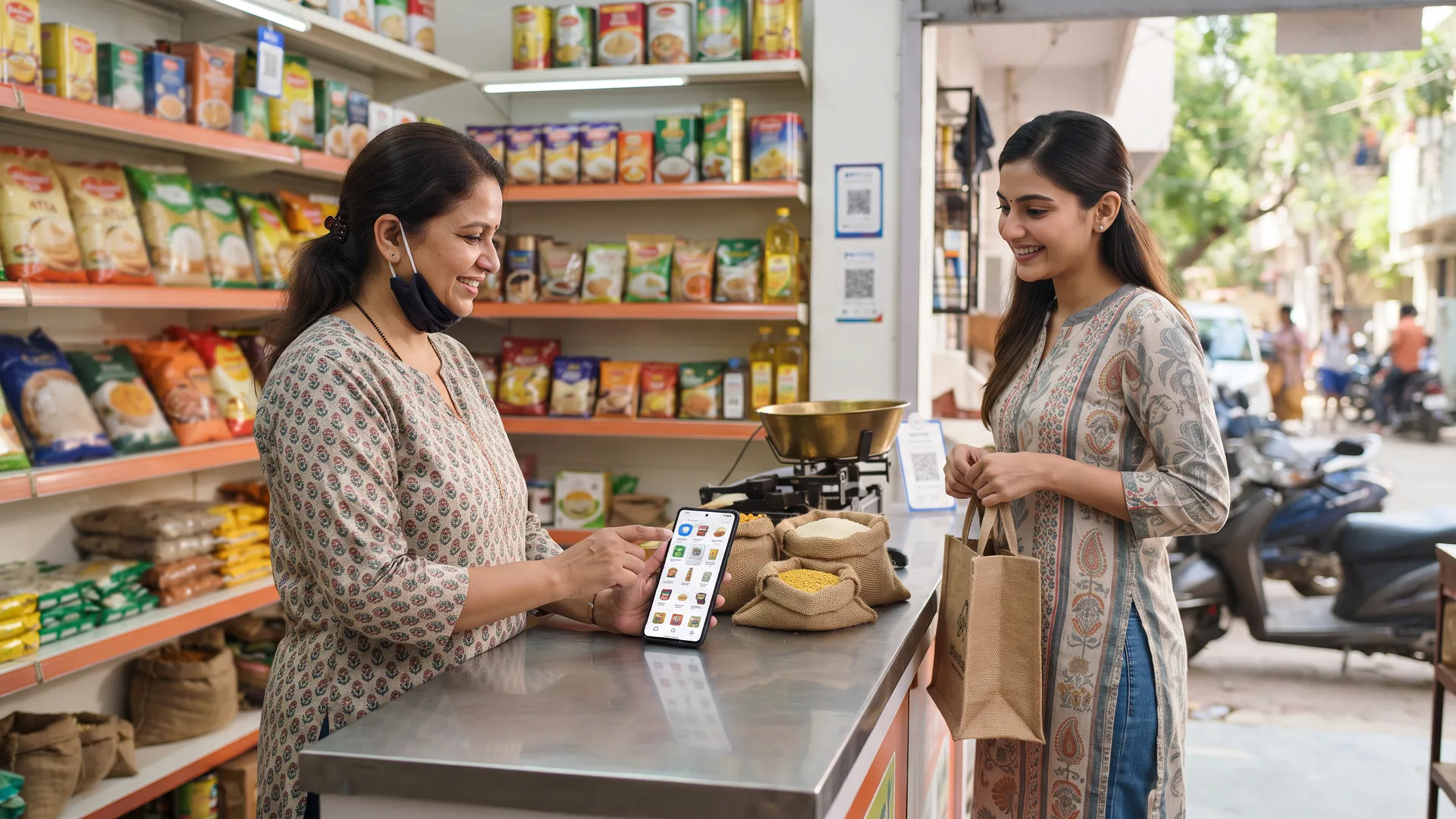
Key operational changes include publishing an organised catalogue with exact unit sizes, maintaining clear operating hours, and setting a manageable delivery radius. When shoppers can favourite their preferred grocery spot and repeat frequent orders with a single tap, retention rates improve naturally. You can explore how structured neighbourhood features compare to basic chat tools by reviewing VoLoMart vs WhatsApp.
“When customers can see our exact daily stock and prices right on their phones, they place orders faster and ask fewer repetitive questions during busy store hours.”
How does VoLoMart support neighbourhood shop growth?
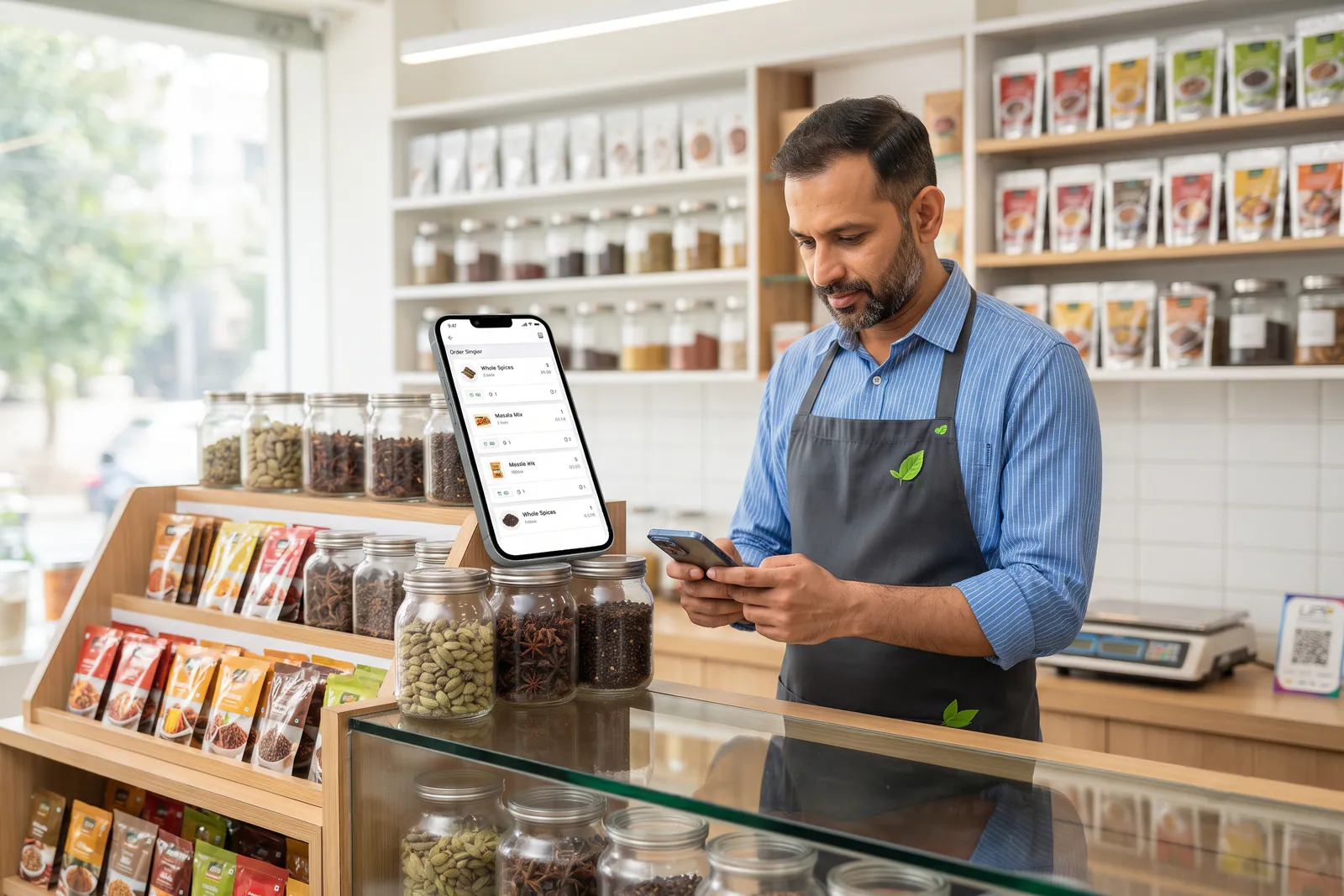
VoLoMart connects nearby customers with trusted local vendors across live categories like VoLoMart supported services. Each order is placed with one nearby shop, and the shopkeeper manages daily operations directly from the vendor side of the mobile app. This design keeps neighbourhood relationships intact while removing administrative clutter.
How does the pricing and revenue model work for vendors?
Understanding store economics is vital when evaluating any digital platform. Vendors register for free and begin with a trial period to test catalogue management and local order handling. Once the trial concludes, shops stay live through a transparent subscription plan. Crucially, the shop keeps the order value, and VoLoMart does not charge a commission on order value. You can check complete plan details on our Pricing page.
| Operational Area | Traditional WhatsApp Method | VoLoMart Neighbourhood App |
|---|---|---|
| Catalogue & Pricing | Scattered photos and manual price replies | Organised catalogue with unit and pack sizes |
| Order Processing | Confusing chat threads and missed calls | Structured order queue with clear status tracking |
| Revenue Retention | Informal cash handling with calculation errors | Shop keeps full order value with zero commission |
What are the real-world operational limits of digital growth?
While digital tools improve order efficiency, technology alone does not create demand from zero. A neighbourhood store still relies heavily on its offline fundamentals, including competitive pricing, helpful customer service, clean stock management, and reliable local delivery within a typical one to three kilometre radius. Digital platforms amplify what a good local shop already offers, but they cannot replace daily retail dedication.
Furthermore, shopkeepers must manage their active hours and ensure listed items reflect physical store availability. COD and Pay on Khata options operate where enabled by the vendor, meaning shop owners retain full control over their credit and payment policies. To understand how neighbourhood commerce connects the community, visit our How It Works guide.
Taking your neighbourhood shop online today
Modernising your retail workflow allows you to capture steady local demand without sacrificing your independence. By replacing messy chat threads with structured digital catalogues, your grocery spot becomes easier to discover for nearby residents who value speed and convenience. Explore our Blog Hub for more vendor playbooks, or get started by downloading the app to take your neighbourhood store online.
Frequently asked questions
Will my store revenue grow immediately after joining VoLoMart?
Revenue growth depends on your local stock availability, service quality, and active catchment engagement. While digital tools make ordering simpler for regular shoppers, maintaining consistent stock and reliable local service remains essential.
Does VoLoMart charge a commission on my daily order values?
No, VoLoMart does not charge a commission on order value. The shop keeps the order value, and participation runs on a straightforward subscription model after your initial trial period.
Do I need a GST registration to start selling on VoLoMart?
Small neighbourhood shops register according to local regulatory standards set by MSME and tax authorities. You can check official guidelines on the Udyam registration portal to understand shop licensing requirements.
How do nearby customers discover my neighbourhood shop?
Nearby customers open the VoLoMart app to browse active shops operating within their immediate locality, typically configured in a nearby delivery radius managed directly by the shop.
How are customer deliveries handled for each order?
Every order is fulfilled directly by the vendor using their own delivery setup or local team, ensuring you maintain complete control over your neighbourhood service area.
List your neighbourhood shop on VoLoMart
Registration is only in the VoLoMart mobile app. Start with a 7-day trial, then choose a monthly or yearly plan.
Get the app to registerRelated articles
6 min read