
Published September 17, 2026 in Alternatives & Competitors
VoLoMart vs Zepto for neighbourhood grocery shopping
By VoLoMart Team
7 min read
TL;DR
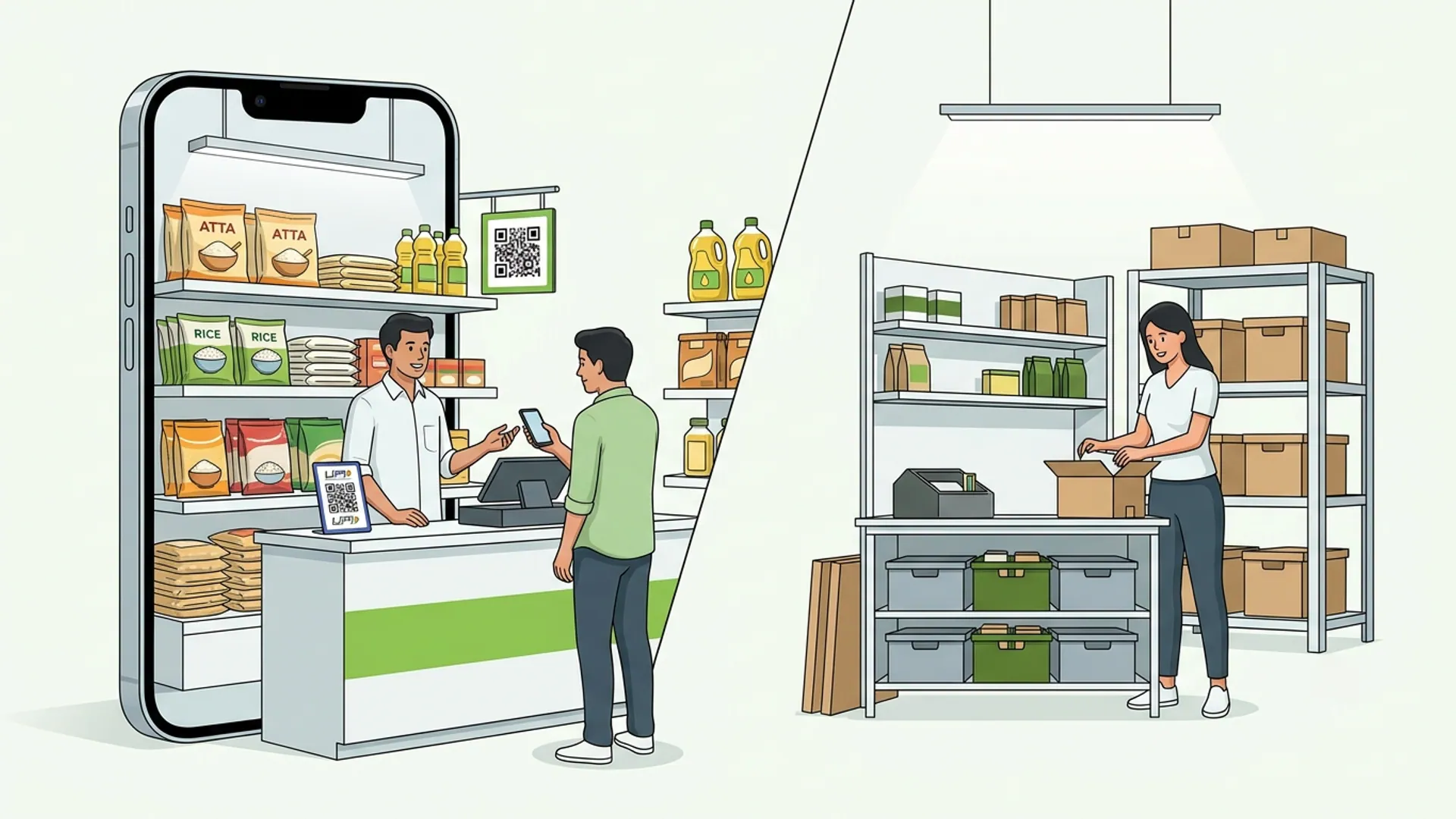
- Zepto relies on a dedicated network of dark stores to fulfil orders in minutes.
- VoLoMart connects you directly to trusted neighbourhood vendors for local delivery or pickup.
- Neighbourhood shops keep their order value and manage their own stock and customer relationships through VoLoMart.
VoLoMart vs Zepto is nearby-shop ordering versus dark-store quick commerce. Zepto is built for minutes-level delivery from its own micro-warehouses. VoLoMart is built so the neighbourhood shop is the seller, keeps the order value, and fulfils locally.
The way urban Indian households buy daily essentials has evolved rapidly. When comparing VoLoMart vs Zepto, shoppers and store owners often weigh the convenience of rapid warehouse-backed delivery against the trusted familiarity of the local neighbourhood shop. This guide breaks down how each model works, who it serves best, and what shopkeepers should consider.
How do Zepto and VoLoMart differ in their operational models?
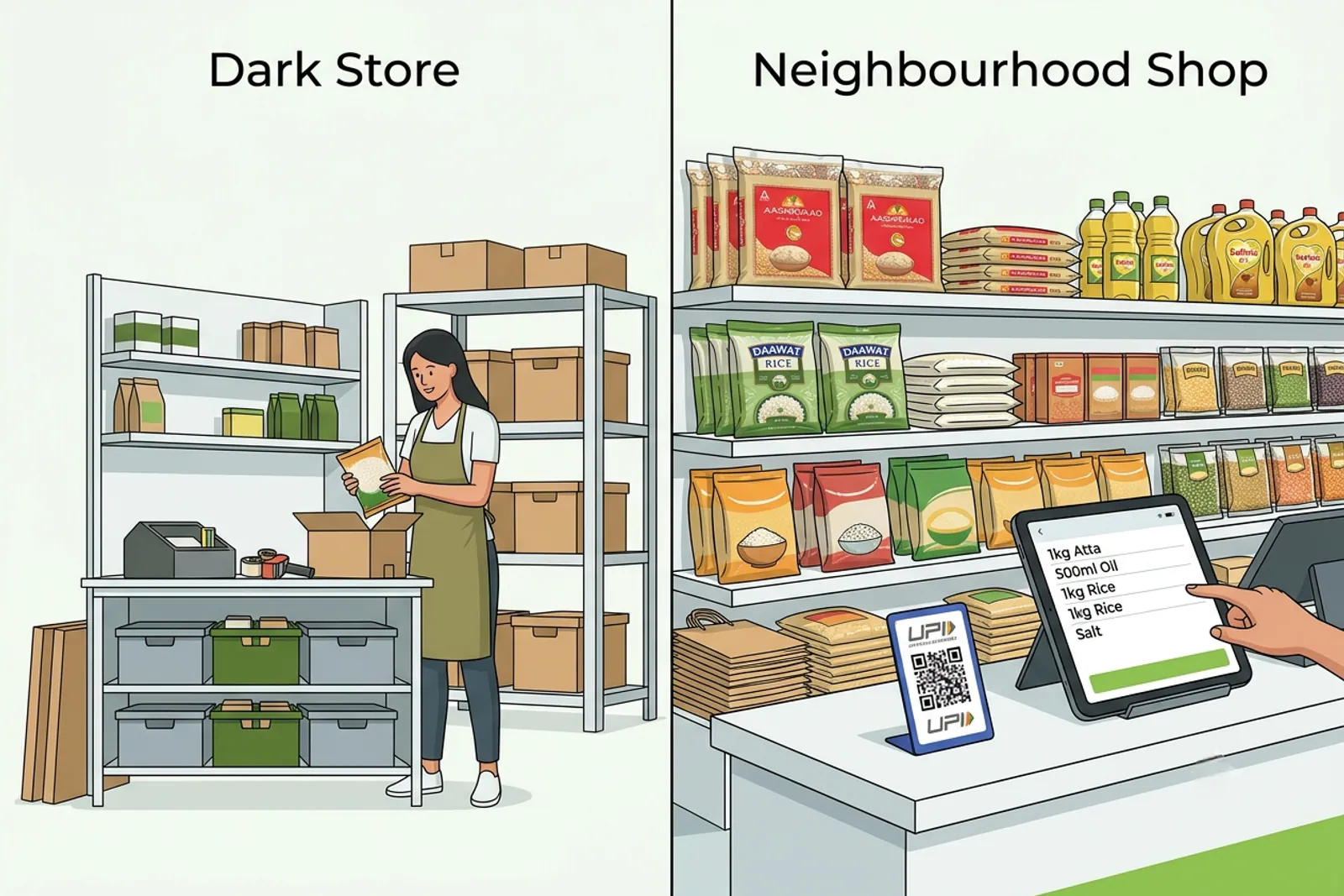
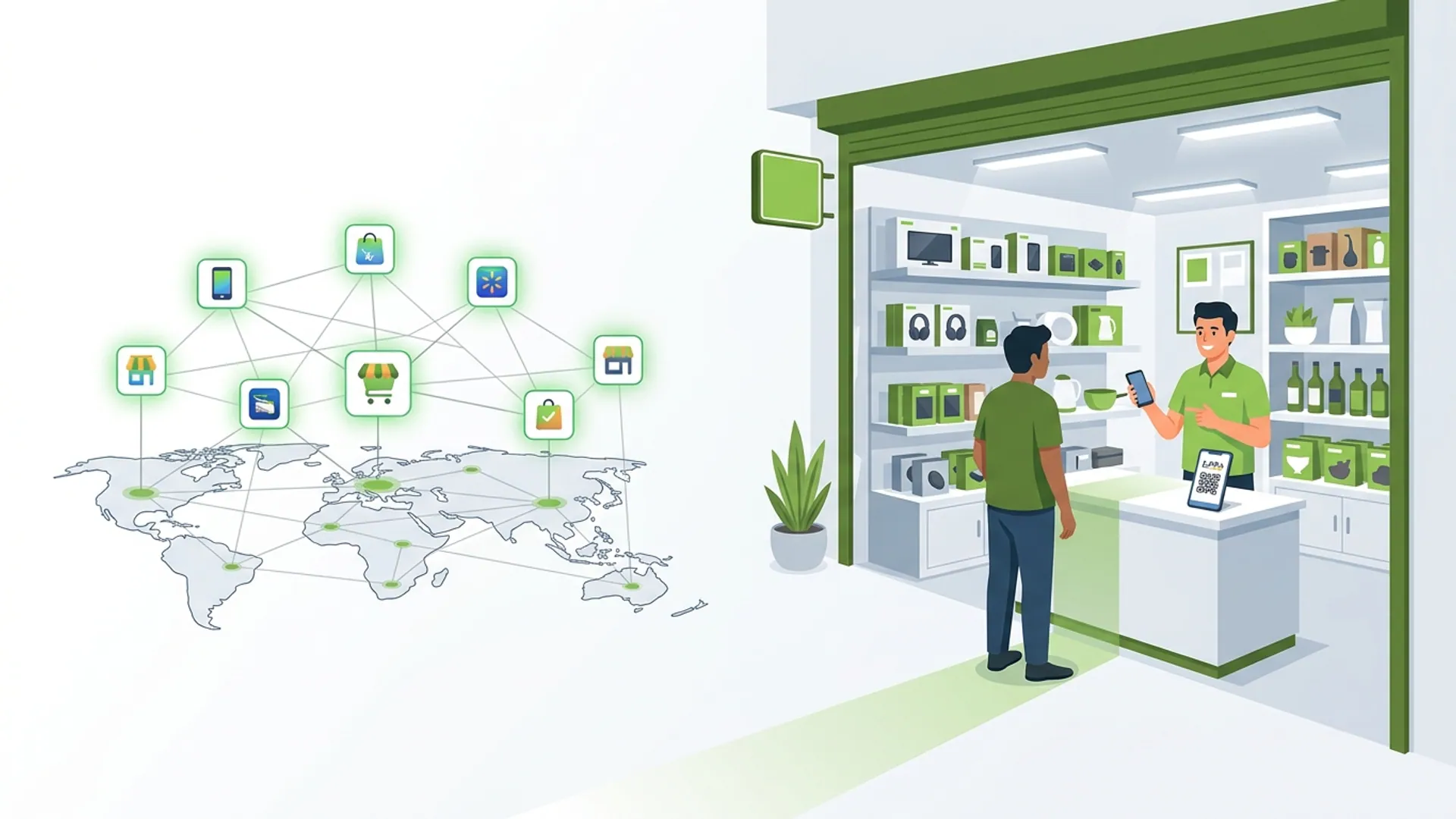
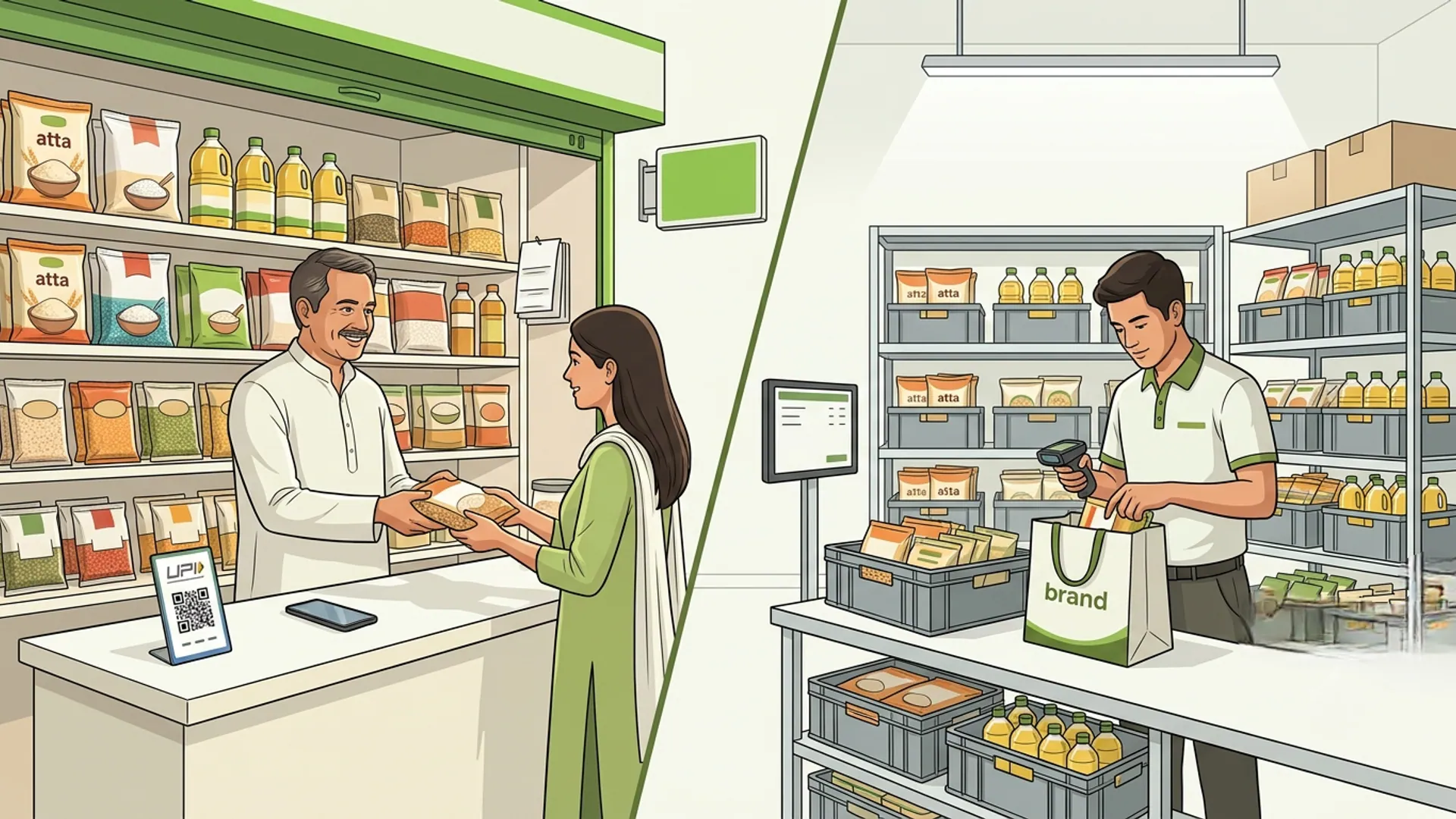
Zepto operates as an independent quick-commerce company that relies on a network of dark stores, which are micro-warehouses closed to walk-in foot traffic. Orders placed on their app are packed inside these facilities and dispatched through gig delivery partners. In contrast, VoLoMart operates as a hyperlocal marketplace that connects customers directly with nearby neighbourhood vendors in live service categories like Grocery Spot, Daily Dairy, and Vegetable Corner.
Where quick commerce centralises inventory in urban distribution nodes, hyperlocal commerce preserves the existing retail fabric of the street. According to guidelines from the Open Network for Digital Commerce, digitising local merchants strengthens community commerce and gives buyers greater transparency into regional product availability.
What should shoppers expect from speed, assortment, and payment options?
Shopper experience varies significantly depending on whether you choose a quick-commerce app or a neighbourhood marketplace. Zepto focuses on a standardised catalogue of tens of thousands of SKUs across large urban clusters, promising rapid delivery windows from the nearest dark store. On VoLoMart, you browse the actual inventory of a specific nearby vendor within your pin code.
- Assortment breadth: Zepto stocks a wide centralised inventory, while VoLoMart showcases the unique items and local brands available at your trusted street shop.
- Delivery fulfilment: Zepto uses dedicated delivery fleets from micro-warehouses, whereas VoLoMart orders are fulfilled directly by the vendor's team or setup within a local radius.
- Payment flexibility: VoLoMart supports Cash on Delivery (COD) and Pay on Khata where enabled by the individual vendor, matching traditional neighbourhood shopping habits.
How do vendor opportunities compare for shopkeepers?
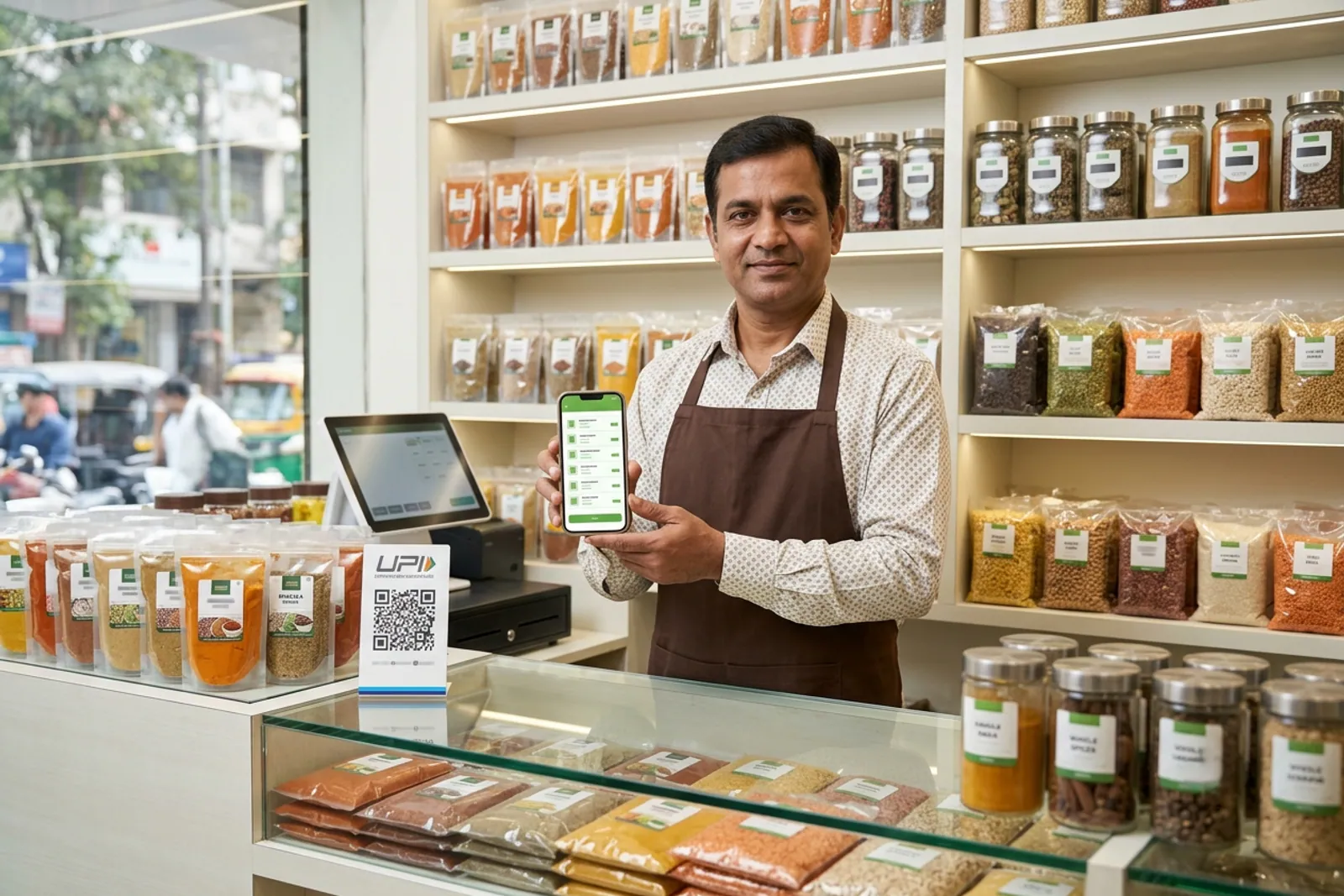
Store owners looking to take their business online face very different paths when evaluating these platforms. You cannot list an independent kirana shop inside Zepto, as their inventory is managed through their proprietary dark-store network and B2B supply chain. Conversely, neighbourhood shops can easily register in the mobile app to get discovered by nearby customers.
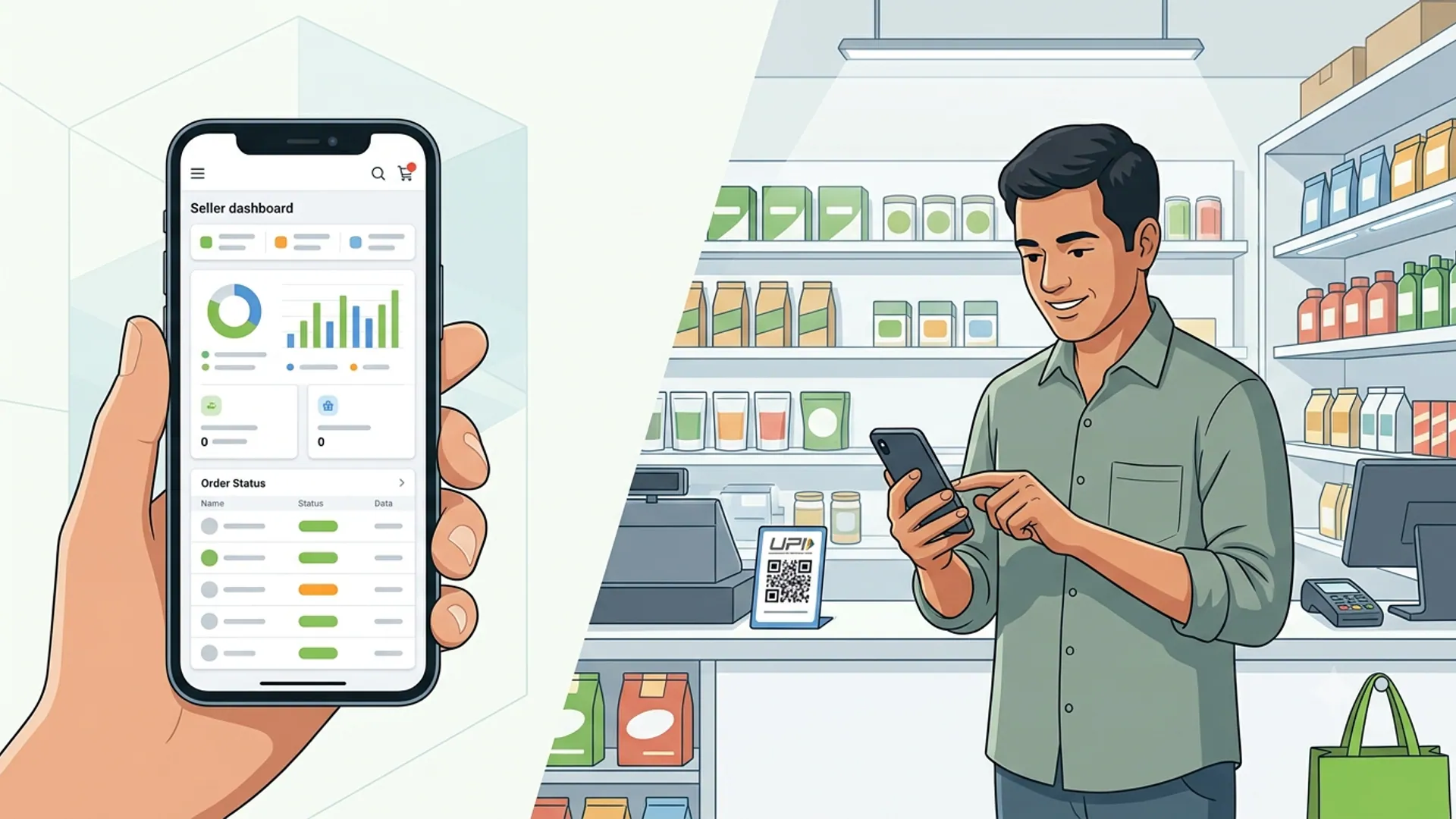
When a shop operates on VoLoMart, the shopkeeper runs the storefront from the vendor side of the app, updates their catalogue, and manages orders directly. The shop keeps the order value; VoLoMart is a subscription after the trial, not a cut of each order. You can learn more about how shops transition online by reviewing VoLoMart features and checking out transparent pricing details.
| Topic | Zepto | VoLoMart |
|---|---|---|
| Who sells | Centralised retail entity | Nearby neighbourhood shop |
| Who stores stock | Dark-store micro-warehouses | The vendor's physical shop shelves |
| Who delivers | Gig delivery network | Vendor's team or chosen setup |
| Typical distance | Urban micro-cluster coverage | Shop-controlled radius (typically 1-3 km) |
| How the shop pays | Not applicable for third-party kiranas | Monthly or yearly subscription after trial |
| Best for | Instant planned or impulse top-ups | Supporting local shops and trusted neighbourhood brands |
What are the operational limits of each platform?
Every digital commerce model comes with specific operational boundaries. Zepto is not designed to support your local family-run kirana store; it operates as an independent retail and logistics enterprise. Its coverage depends on dark-store density in major metropolitan pockets rather than hyper-local street reach.
On the other hand, VoLoMart is not a 10-minute dark-store machine. Stock availability is tied directly to that specific shop's physical shelves, and each order is placed with one nearby shop. Operating hours, delivery charges, and service areas are managed entirely by the vendor and shown clearly at checkout.
“Customers in our lane love knowing that the grocery items they order online are coming straight from our physical counter where they have shopped for years.”
How to choose the right channel for your daily shopping
Deciding between quick commerce and neighbourhood marketplaces depends on what you value most during your daily routine. If you need hyper-fast delivery of standardised packaged goods from a warehouse, quick-commerce apps fit that workflow. If you want to support neighbourhood shops, buy trusted local brands, and maintain a direct relationship with your community merchant, exploring nearby vendors on VoLoMart is the ideal path forward.
Whether you are a shopper looking for daily essentials or a shopkeeper wanting to digitalise your store without losing your independence, understanding these differences ensures you get the best of modern convenience and local trust. Visit VoLoMart to explore more guides or get started in the app today.
Frequently asked questions
Is VoLoMart like Zepto?
No, VoLoMart is a hyperlocal marketplace that connects you to existing neighbourhood shops, whereas Zepto operates its own network of dark stores for rapid deliveries.
Which platform offers faster grocery delivery?
Zepto is structured around rapid delivery from micro-warehouses, while VoLoMart delivery times depend on your chosen neighbourhood shop and its local delivery radius.
Can my local kirana shop sell on Zepto through VoLoMart?
No, Zepto uses a centralised dark-store inventory model, whereas VoLoMart is designed specifically to bring your neighbourhood storefront online with a monthly or yearly subscription.
Does VoLoMart charge a commission on order values?
No, VoLoMart does not charge a commission on order value; participating shops keep their earnings and operate under a simple subscription model.
Does Zepto use local independent shops for its inventory?
Zepto sources inventory through its own supply chain into dark stores rather than listing independent walk-in neighbourhood kirana stores on an open marketplace.
What product categories overlap between both services?
Both platforms cover daily essentials, packaged foods, and household items, but VoLoMart specifically highlights distinct neighbourhood shops across grocery, dairy, and fresh produce.
List your neighbourhood shop on VoLoMart
Registration is only in the VoLoMart mobile app. Start with a 7-day trial, then choose a monthly or yearly plan.
Get the app to registerRelated articles
7 min read